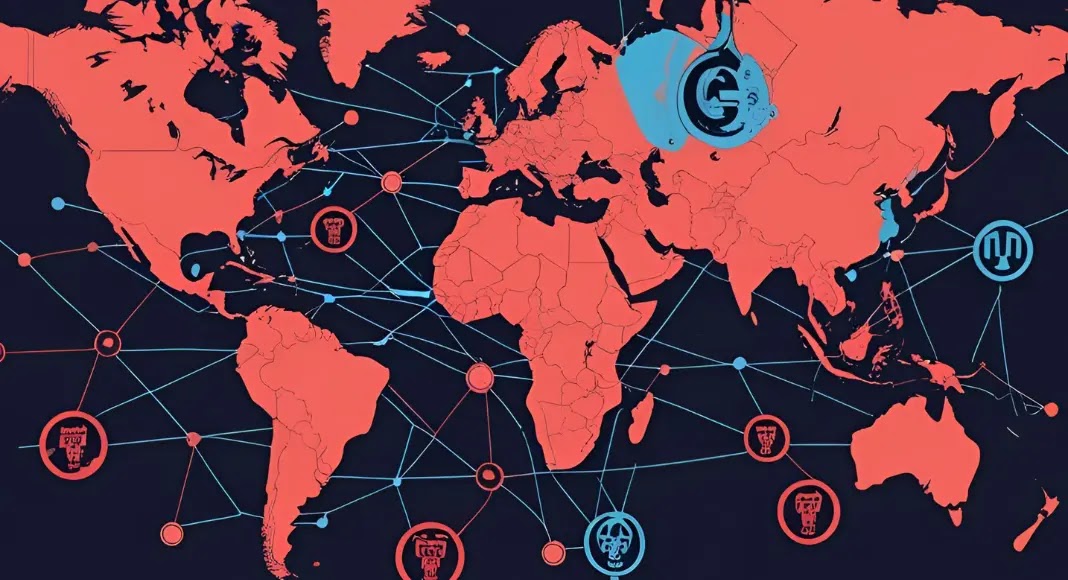
A recently unveiled cybercrime organization, GLOBAL GROUP, is making headlines with its new ransomware-as-a-service (RaaS) offering on the Ramp4u forum. Marketed as a sophisticated platform, it promises automated attacks and lucrative profit-sharing for affiliates. However, experts suggest that this is not a groundbreaking new entity but rather a rebranding of existing ransomware families, particularly Mamona RIP and Black Lock.
"GLOBAL GROUP is leveraging its well-established infrastructure, now refreshed with a new image to attract affiliates, which is a common tactic among cybercriminals," said Andre McKinsey, a cybersecurity analyst. The group is characterized by its operator, known only as $$$, who has expertly utilized a Golang-designed ransomware payload that enables cross-platform functionality.
"GLOBAL GROUP is leveraging its well-established infrastructure, now refreshed with a new image to attract affiliates, which is a common tactic among cybercriminals,"


This choice of programming language is gaining traction among cybercriminals due to its concurrency strengths, showcasing the group's intent to leverage modern development trends to enhance their malware's effectiveness. The ransomware is engineered to function seamlessly across Windows, Linux, and macOS, potentially widening its victim pool.
"The ability of Golang’s static linking to bolster evasion capabilities has become a game changer in ransomware development," explained cybersecurity expert Dr. Lisa Chen. The group’s use of a previously identified mutex string, Global\Fxo16jmdgujs437, highlights its roots. This identifier, customarily associated with the Mamona RIP and Black Lock families, indicates a continued evolution rather than a total departure from its predecessors.

"The ability of Golang’s static linking to bolster evasion capabilities has become a game changer in ransomware development,"

The ransom delivery mechanism employed by GLOBAL GROUP utilizes the ChaCha20-Poly1305 encryption algorithm, which is noted for providing a high level of confidentiality and integrity for affected files. Each encrypted file receives a specific extension, chosen by the affiliates, and file names often undergo randomization, complicating victim recovery efforts.
Championship Implications

"The ransom note embedded within the malware reflects a significant level of technical skill. Delivery is executed directly to the file system, a move that embodies the group's commitment to making the ransomware experience as seamless as possible for their operations," stated investigative researcher Jenna Wilson. The ransom note directs victims to a Tor-based leak site and a negotiation portal, cementing the group's preference for double-extortion tactics—common in today's ransomware landscape, where data breaches are increasingly utilized as leverage.
Importantly, the communication style in the ransom note employs a coercive tone, evident in claims that reinforce the group's reliability. Victims are offered a chance to upload a test file, purportedly for free decryption, creating an illusion of trust while simultaneously coercing them into fearing potential data loss.
However, despite these developments, GLOBAL GROUP exhibits significant operational security vulnerabilities that could jeopardize its operations. Investigators have successfully traced their backend infrastructure by dissecting leaked API metadata sourced from the frontend JavaScript of their leak site.
Championship Implications
Championship Implications
Championship Implications
"As experts, we often critique the operational security, or OPSEC, lapses seen in many cyber groups. In this case, we identified a real-world IP address, 193.19.119.4, which points to their Virtual Private Server (VPS) provider, as well as backend SSH credentials," mentioned Tom Richards, a security operations professional. This misstep, attributed to hosting by a Russian provider, could potentially expose the group to law enforcement scrutiny.
Overall, GLOBAL GROUP's surge in ransomware activity exemplifies the dynamic nature of cyber threats, where advanced tactics coexist with negligent practices. As they continue to target a wider array of operating systems, vigilance remains paramount among individuals and organizations alike.
The cybersecurity landscape is poised for more challenges as ransomware tactics grow increasingly sophisticated and the need for effective defensive measures becomes critical.